
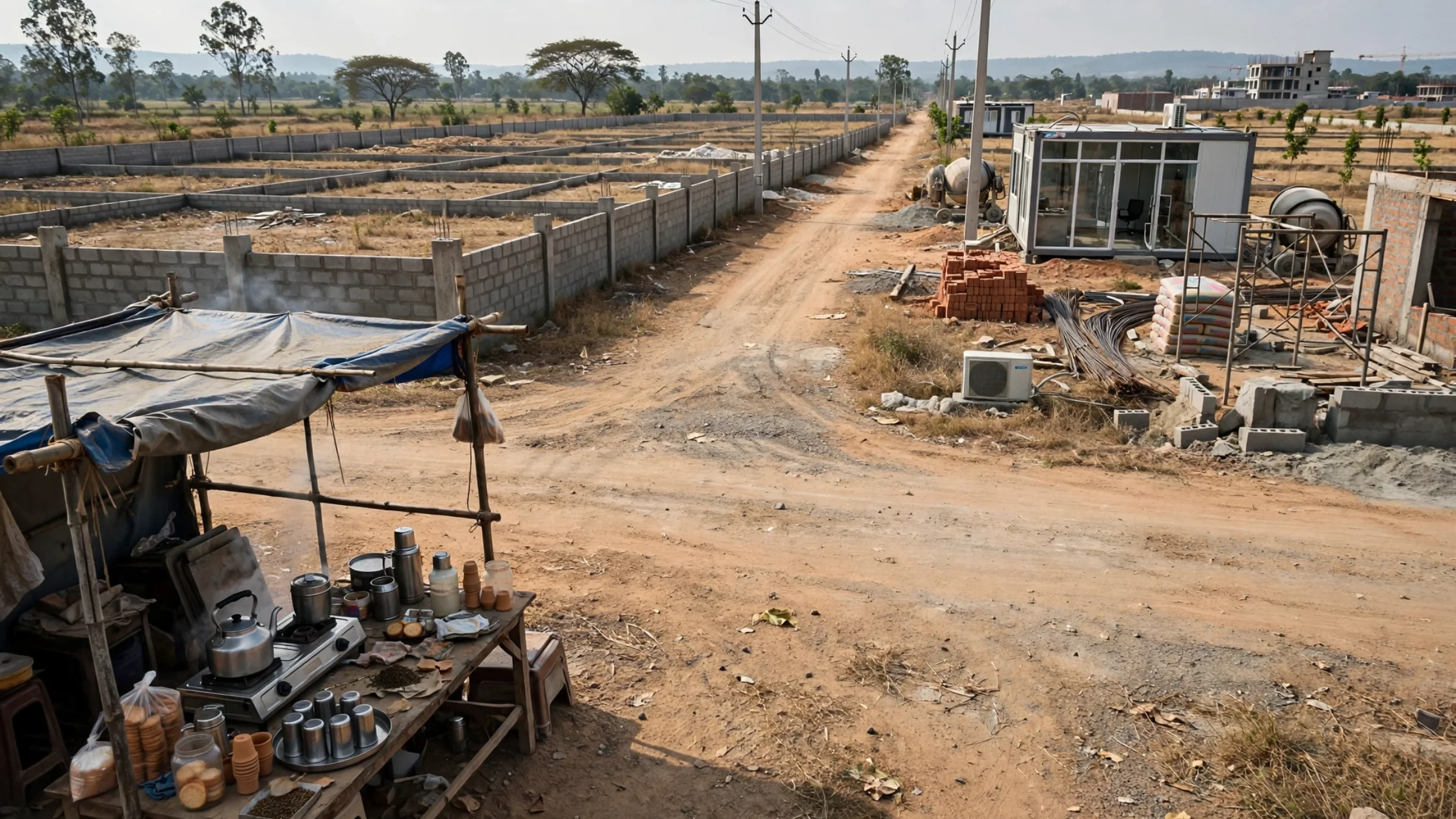
Drive twenty minutes past where the city feels finished and the same scene repeats: a boundary wall, a board with a survey number, a chai stall, a sales cabin promising a township. Some of those boards become real neighbourhoods. Plenty don’t. Sorting the two is the whole job when you’re shortlisting future growth areas in Bangalore, and it has little to do with how good the brochure looks. Naverah Assets helps property buyers look beyond the marketing and consider the location, infrastructure and development factors that can shape a neighbourhood’s future. Below are five corridors with genuine momentum, along with what could go wrong in each. Treat all of it as general information rather than investment advice, and check every claim against documents before you pay anything. Naverah Assets encourages buyers to carry out their own due diligence before making any property decision.
Before the names, the filter. Three things separate a corridor that grows from one that stalls.
Employment comes first. If nobody works within a reasonable commute, homes sit empty and prices drift. Then approvals: a layout with BMRDA or BDA sanction and A-Khata behaves completely differently at resale than a revenue-survey plot sold on a promise. Amenities follow both, never lead them.
Ask a simple question about any road, metro line or rail project: has work started? Tenders awarded and machinery on site count. Feasibility studies don’t. Most disappointing purchases in emerging areas Bangalore buyers made over the past decade came from paying today for infrastructure that arrived eight years late. That one question separates genuine future growth areas in Bangalore from expensive waiting rooms faster than any other check.
Bagalur sits between the airport road and Hosur Road’s northern equivalent, close to the aerospace and hardware employment near Devanahalli. Entry prices remain below Devanahalli’s core, which is the main attraction, and land parcels are large enough for planned layouts.
What holds it back is daily life. Retail, schools and healthcare are thinner than the marketing suggests, so early residents commute for most things. If you’re buying to live rather than to hold, visit on a weekday evening before deciding. Bagalur ranks high on most lists of future growth areas in Bangalore precisely because its gap between price and eventual potential is still wide.
Past Dommasandra, towards Attibele, prices are noticeably softer than anything closer to the city. Employment on this side is real and growing, and several large campuses anchor demand.
The risk is congestion. Sarjapur Road’s traffic is a genuine constraint, and planned road capacity has repeatedly lagged the housing built alongside it. Among upcoming property locations in the southeast, this one rewards patience and punishes anyone who needs a short exit.
Hoskote is unglamorous, industrial in parts, and cheap by comparison. That combination has quietly made it one of the more interesting Bangalore growth corridors. Warehousing, manufacturing and logistics employment sit right there, and the highway plus the eastern metro extension improve access year by year.
Don’t expect premium living. Expect land at a fraction of eastern city rates, a longer runway, and a buyer profile weighted towards end users rather than investors. Plenty of lists of future real estate hotspots skip Hoskote entirely, which is part of why the entry price is still reasonable.
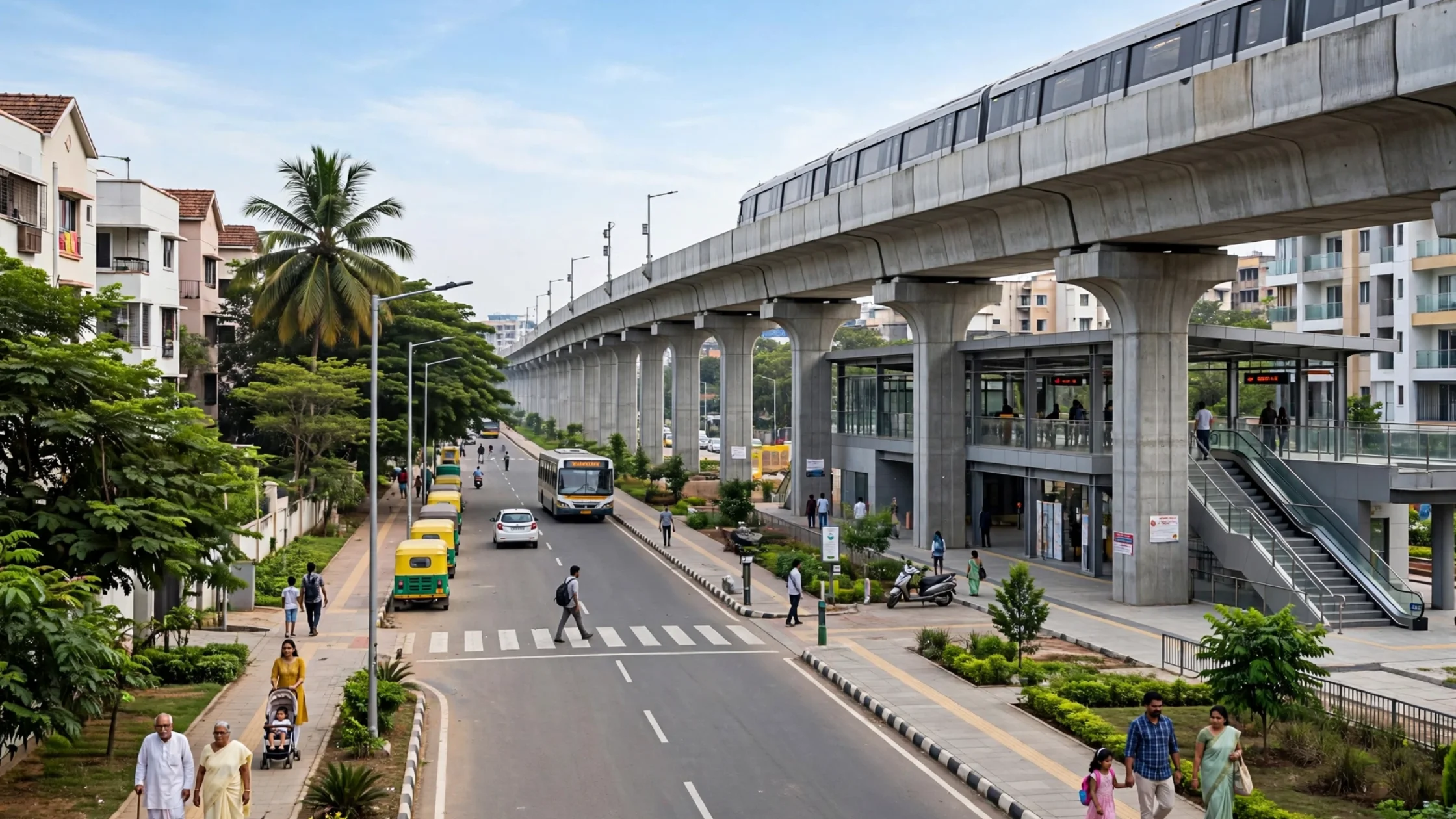
Metro changed this corridor’s character. Stations shortened the commute in a way no amount of road widening had managed, and prices around the operational stretch responded. Green cover and lower density make it appealing for families who found east Bangalore claustrophobic.
Supply is the concern. A lot of inventory launched at once, and competing supply flattens price growth for years even where demand is healthy. Buy near a station, not near a promise of one. It stays on shortlists of emerging areas Bangalore families actually move to, which supports resale.
The airport belt remains the most institutionally backed of the developing areas Bangalore has to offer, and few upcoming property locations carry this much committed investment. Business parks, hospitality, a hardware park and steady infrastructure spending give it a floor most outer corridors lack.
The trade-off is time and rental weakness. Occupancy is still thin, so a flat here may sit vacant while a comparable one in Thanisandra rents in three weeks. Plots and villas suit this corridor better than apartments bought for yield.
Ranges are indicative and shift with approval status, plot size and packaging.
| Corridor | Best suited to | Realistic horizon | Main watch-out |
|---|---|---|---|
| Bagalur | Land, long hold | 7 to 10 years | Thin amenities |
| Outer Sarjapur | End users, villas | 5 to 8 years | Traffic |
| Hoskote | Value land buyers | 7 to 10 years | Industrial mix |
| Kanakapura Road | Families, apartments | 4 to 7 years | Oversupply |
| Devanahalli | Plots, villas | 7 to 10 years | Slow occupancy |
The corridor can be right and the purchase still wrong. Watch for these:
• Title and approval gaps. Revenue layouts, missing conversion orders and B-Khata inventory look cheap because they carry real limitations on financing and resale.
• Promoter track record. Check the developer’s earlier projects against their RERA Karnataka timelines rather than their brochure claims.
• Zero rental support. Outer corridors often produce very low yields, so your EMI runs unaided for years.
• Water and sewerage. Borewell dependence and private tanker supply are ongoing costs, and they affect resale more than buyers expect.
• Exit liquidity. Selling a plot in a half-occupied layout can take many months, at a discount.
Run the paperwork properly: a thirty-year encumbrance certificate, sale deed read against the mother deed, khata verification, and stamp duty plus registration charges built into your entry cost. Every one of the future growth areas in Bangalore listed here contains both clean projects and messy ones, sometimes on the same road.
Most of these corridors don’t rise smoothly. A launch-phase bump, a long flat stretch while construction crawls, then a step change when a road opens or a large employer moves in. Buyers who sold during the flat years usually regretted it, and buyers who paid top of a hype cycle waited a long time to get level. That pattern repeats across future real estate hotspots everywhere in the district, and it catches out anyone expecting a straight line.
Plan your finances around the flat years. The future growth areas in Bangalore that eventually pay off reward the buyer who can sit still through them. If a slow patch would force you to sell, the corridor is too speculative for your situation regardless of how promising it looks.
North Bangalore around Devanahalli and Bagalur has the strongest institutional backing, while outer Sarjapur and Hoskote offer cheaper entry with longer waits. Kanakapura Road benefits most from operational metro. The best choice depends on your holding period, budget and whether you want land or a rentable home.
In outer areas, usually yes. Land supply is fixed and structures depreciate, while apartments in thinly occupied corridors can sit vacant for months. Land earns nothing meanwhile, needs a larger upfront payment, and carries encroachment risk, so it suits buyers with patience and no dependence on rental income.
Plan for seven to ten years in outer corridors and four to seven where metro or major employment already exists. Maturity means schools, hospitals, retail and reliable water, not just occupancy certificates. Anyone promising a three-year transformation is selling optimism rather than describing how these markets have historically behaved.
Confirm A-Khata status, layout approval from BDA, BMRDA or the relevant authority, the conversion order for former agricultural land, and a thirty-year encumbrance certificate. Read the sale deed against the mother deed for an unbroken title chain, and check RERA Karnataka registration for any project under construction.
The five corridors here share momentum but not timelines, and that difference matters more than any ranking. Bagalur and Devanahalli reward patience with land. Kanakapura Road suits families who want to live somewhere now. Hoskote and outer Sarjapur sit in between, cheap for reasons worth understanding before you commit. The future growth areas in Bangalore that work out for you are the ones matched to your holding capacity and verified on paper, not the ones with the loudest launch. Nothing here is investment advice, and a qualified property lawyer should review any title before you pay.
If you’re weighing up your options, Naverah Assets can help you explore properties and understand your choices based on your requirements. Connect with Naverah Assets to get guidance from an experienced local team.
Follow us on Instagram for more Bangalore property updates!


