
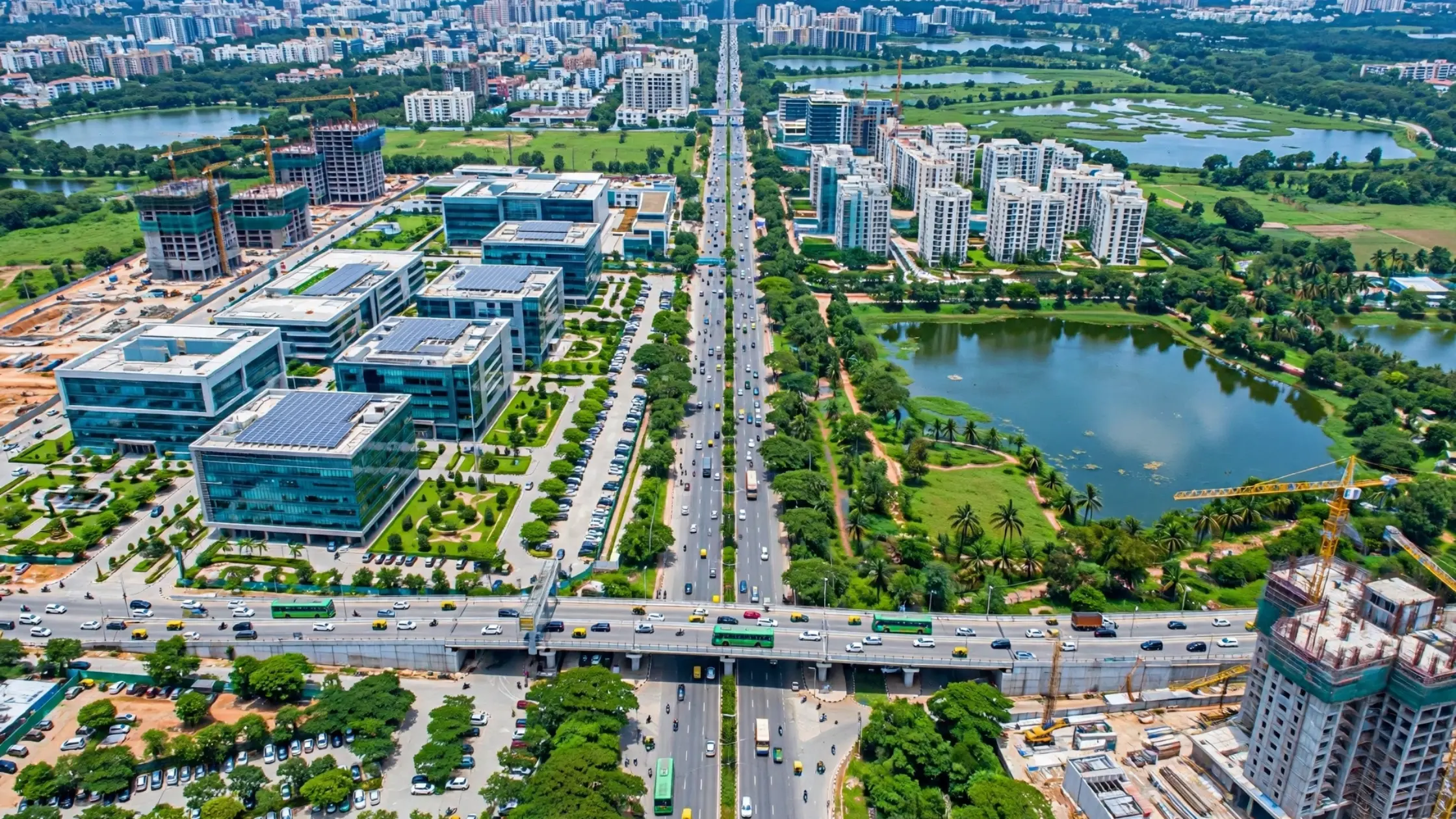
Ask five people in Bengaluru where prices are heading and you'll get five confident, contradictory answers. One is certain Devanahalli is the next Whitefield. Another says the north is overbuilt. Any honest Bangalore property market forecast 2026 begins by admitting that this city never moves as a single block. It moves in pockets, usually behind infrastructure rather than ahead of it. Naverah Assets takes a practical, location-focused approach when assessing these changing market trends.
What follows is a practical read of where demand, supply and connectivity point, plus the things that could flatten the curve. Treat it as a framework for your own diligence rather than a prediction. With insights from Naverah Assets, buyers can better evaluate opportunities based on infrastructure, demand, pricing and long-term growth potential.
Three forces do most of the work: employment, land cost and construction cost.
Housing demand here tracks white-collar hiring more closely than anything else. Global capability centres and engineering teams keep pulling people into a handful of employment clusters, and housing forms around them with a two to three year lag. When office leasing in Whitefield or along the Outer Ring Road firms up, resale enquiries in Varthur, Panathur and Balagere follow within a few quarters. That link is the most reliable signal in the bangalore real estate outlook, and it's why a credible bangalore property market forecast 2026 starts with employment rather than sentiment.
Land in the established corridors has been the biggest cost increase for developers, with cement, steel and skilled labour close behind. New launches rarely undercut nearby inventory by much. If one is priced well below its neighbours, the reason is specification, approval status or distance from the arterial road, not generosity. Keep that in mind whenever a bangalore property market forecast 2026 headline talks about bargains.
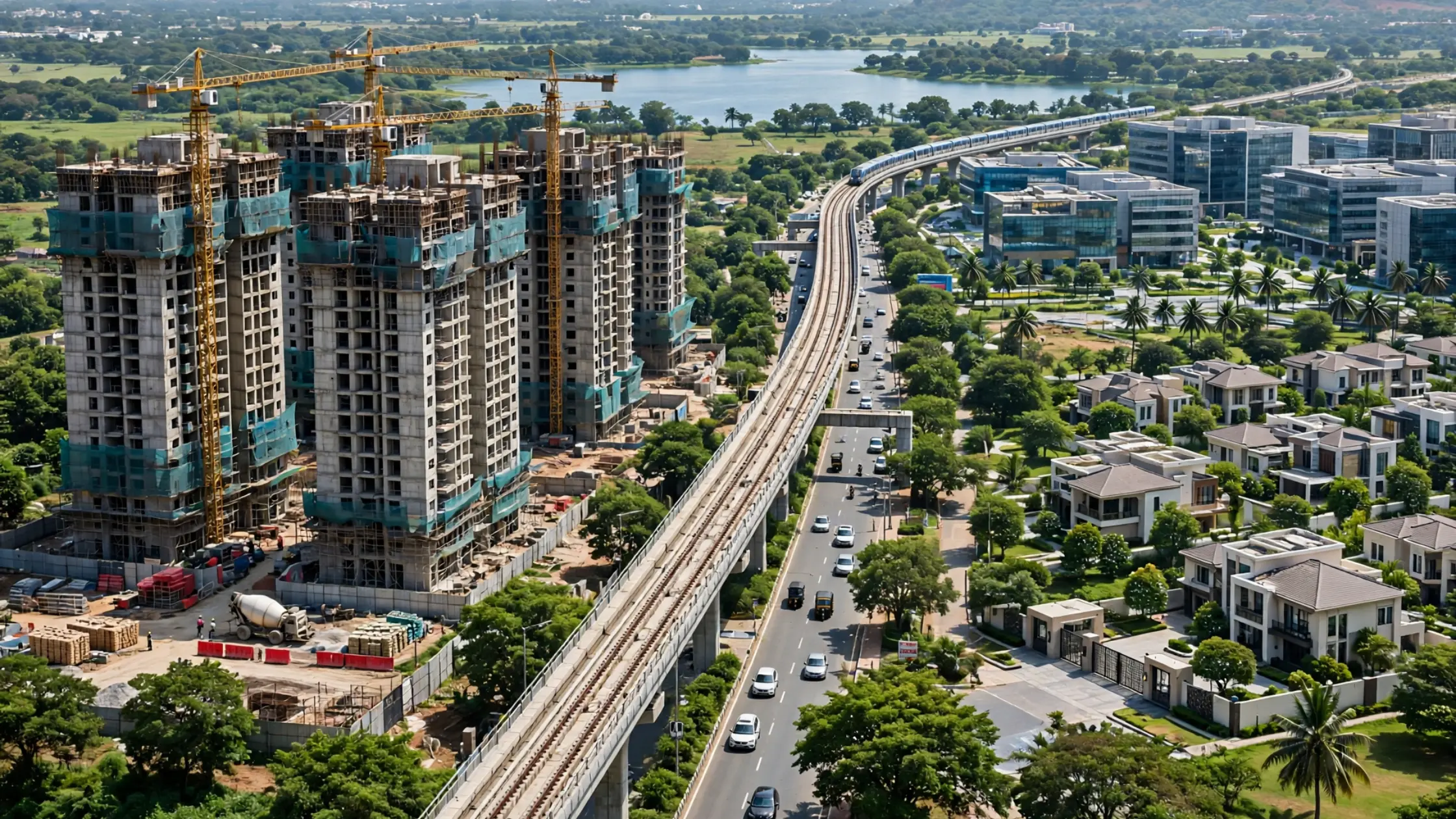
This is where a bangalore property market forecast 2026 earns its keep, because the spread between corridors is far wider than any citywide average suggests.
The airport corridor still has the longest runway. Aerospace parks, the business district near the airport and steady road upgrades keep interest alive, and plots have historically outperformed apartments because approved land is finite. The caution is timing. Some pockets are priced for infrastructure that's announced but not delivered.
Metro connectivity changed the calculus for anyone who wrote Whitefield off as a commute trap, though prices absorbed much of that news already. Upside now is about rental strength more than capital gain. Sarjapur Road is the opposite: strong bangalore property demand, a deep tenant pool, and roads that haven't kept pace. If the planned connectivity lands, it's one of the more interesting bets going. If it slips, you've bought congestion.
The stretch between Marathahalli and Hebbal is the highest-rent belt in the city. Yields hold, resale is liquid, vacancy is short, and you pay for that upfront. Indiranagar, Malleswaram and Richmond Town behave like scarcity assets rather than growth assets: low yields, dependable retention. South Bengaluru along Kanakapura and Bannerghatta Road gives more house per rupee, helped by metro extensions.
Indicative ranges only, dependent on specification, floor and developer track record. Bangalore property trends 2026 vary by budget band as much as by pin code.
Any bangalore property market forecast 2026 quoting one citywide percentage flattens those four rows into a single unhelpful number.
Gross rental yields in Bengaluru typically sit in the low single digits, and net yields land lower once maintenance, property tax and vacancy are honest inputs. Rental income alone rarely justifies a purchase. What it gives you is a floor under your holding cost.
Bangalore property demand from tenants clusters tightly. A flat fifteen minutes from an employment hub rents in days; the same flat forty minutes away can sit empty for six weeks. Before buying to let, check three things:
• Peak-hour commute time by road, not map distance
• How many similar units in the project are already listed for rent
• Whether the maintenance charge is high enough to put tenants off
The property market trends Bangalore watchers argue about online are mostly noise. Useful indicators are duller: launch volumes in your micro-market, the ratio of resale to new-sale listings, time on market, and whether developers are quietly sweetening payment plans. When incentives creep up, supply is running ahead of absorption. Track that for two quarters and your bangalore real estate outlook sharpens fast.
Two identical-looking flats can differ sharply in resale value purely because of paperwork. Confirm RERA Karnataka registration and read the filing, not the brochure copy. Check whether the property carries Khata A or Khata B, since Khata B can create financing and transfer friction. Establish which authority approved the layout, whether BBMP, BDA or BMRDA, and pull an encumbrance certificate. For plots and resale, trace the mother deed and the chain of sale deeds. Budget separately for stamp duty and registration charges, plus GST on under-construction inventory. These aren't rounding errors, and they quietly reshape what the bangalore property market forecast 2026 means for your own outlay.
No bangalore housing market forecast survives contact with reality untouched. The credible downsides are infrastructure slippage, a hiring slowdown in tech, oversupply where several large projects complete together, and rate movement changing what buyers can borrow. Water is a real constraint in parts of the east and north, and buyers now ask about borewell depth and Cauvery connection before the clubhouse. There's a behavioural risk too: bangalore property trends 2026 debates reward the most exciting story, and exciting stories are usually about places nobody has built yet.
A forecast is only useful if it changes what you do.
1. Fix your budget from loan eligibility and EMI comfort, not from the flat you liked
2. Shortlist two corridors, not six, and visit both on a weekday evening
3. Compare three projects per corridor on price per square foot, carpet area and carrying cost
4. Get a legal opinion on title before paying beyond a token amount
5. Assume a seven-year hold, then check the numbers again
Anyone reading a bangalore property market forecast 2026 hoping for a twelve-month flip is reading the wrong document.
That depends far more on your holding period than the calendar. If you'll hold seven years or more and the EMI sits comfortably inside your income, the bangalore property market forecast 2026 reads reasonably for end users. Short-term speculators face thinner margins and liquidity risk in unproven corridors.
North Bengaluru around Devanahalli, Sarjapur Road and metro-connected Whitefield attract the most attention. Appreciation follows delivered infrastructure rather than announced infrastructure, so verify what's operational before you pay for it. Established ORR pockets offer steadier growth with better rental liquidity.
Plots have historically appreciated faster in outer corridors but earn nothing while you hold them and carry higher title risk. Apartments give rental income, easier financing and simpler due diligence, with slower capital growth. Your answer depends on whether you need cash flow or can leave capital idle.
Plan for stamp duty and registration charges, GST on under-construction units, legal fees, interiors, and a year or two of maintenance and property tax. Buyers routinely underestimate this and land short at handover. A sensible buffer above the agreement value keeps the purchase from turning stressful.
The most useful thing about a Bangalore property market forecast 2026 is what it stops you doing. It stops you buying an unapproved layout because someone promised an expressway, and it stops you stretching an EMI to reach a corridor that won't be liveable for four more years. The city's growth story is real, but uneven. Buyers who do well are the ones who checked the title, walked the road at 7pm and bought within their means. Naverah Assets can help you explore options with a practical, local perspective. Treat this as general information rather than investment advice.
If you're weighing up your options, speaking with an experienced local team like Naverah Assets is the fastest way to get answers matched to your situation. For more Bangalore real estate updates, tips, and property insights, follow Naverah Assets on Instagram and stay connected. Find Your Dream Property in Bangalore.


