
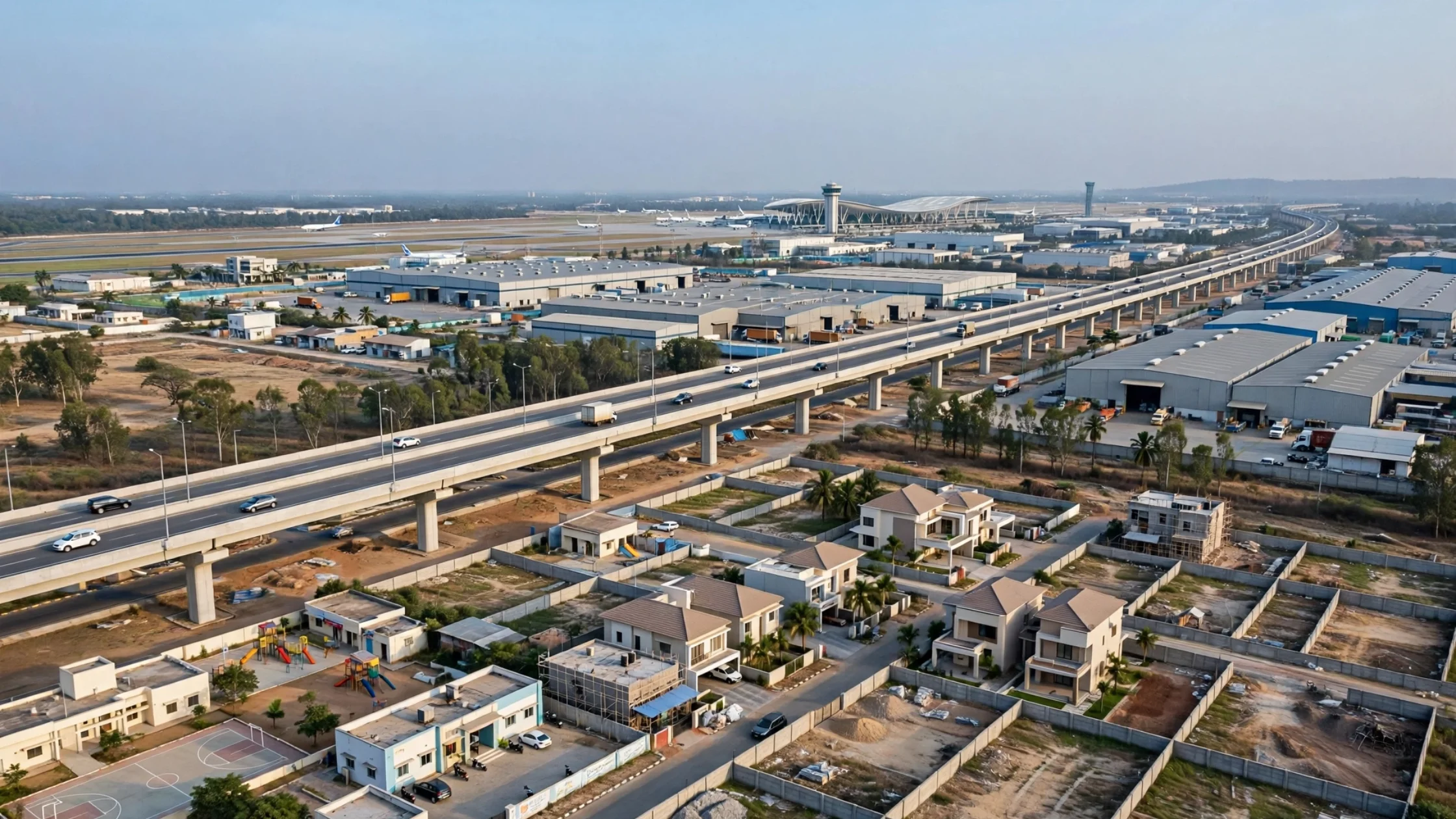
You’ve probably heard both versions. One friend bought a site here years ago and now quotes a number that sounds invented. Another bought an apartment, waited eighteen months for a tenant, and still grumbles about it. Both stories are true, which is why questions about Devanahalli property investment rarely get a clean answer at a family lunch. Naverah Assets understands that every property decision comes with different expectations, budgets, and timelines. The honest position in 2026 is that this corridor has moved from speculative to semi-established, and that changes who it suits. What follows is general information rather than investment advice, aimed at helping you judge the trade-offs yourself. With guidance from Naverah Assets, buyers can explore the available property options and consider what aligns with their individual goals.
The easy money is gone. Land that changed hands cheaply a decade ago has repriced, sometimes several times over, and buyers arriving now pay for infrastructure that already exists rather than infrastructure that might. Anyone approaching Devanahalli property investment expecting the old multiples will be disappointed.
That doesn’t make it a bad buy. It makes it a different one. The Devanahalli property market today behaves more like a maturing suburb than a frontier, with real approvals, real construction and a slowly thickening layer of schools, clinics and retail. Growth from here is likely to be steadier and less dramatic.
Three forces do most of the work, and it helps to separate them.
Kempegowda International Airport is the anchor, but the airport itself employs a fraction of what the surrounding parks do. Aerospace, hardware manufacturing, hospitality and logistics have built genuine local employment. That matters far more for Devanahalli real estate than passenger numbers, because people rent and buy near where they work.
The elevated expressway made the commute predictable, which is the main reason this corridor works at all. Metro extension northward and suburban rail proposals would improve things further, though timelines have slipped before. Buy on what’s operational, treat the rest as upside.
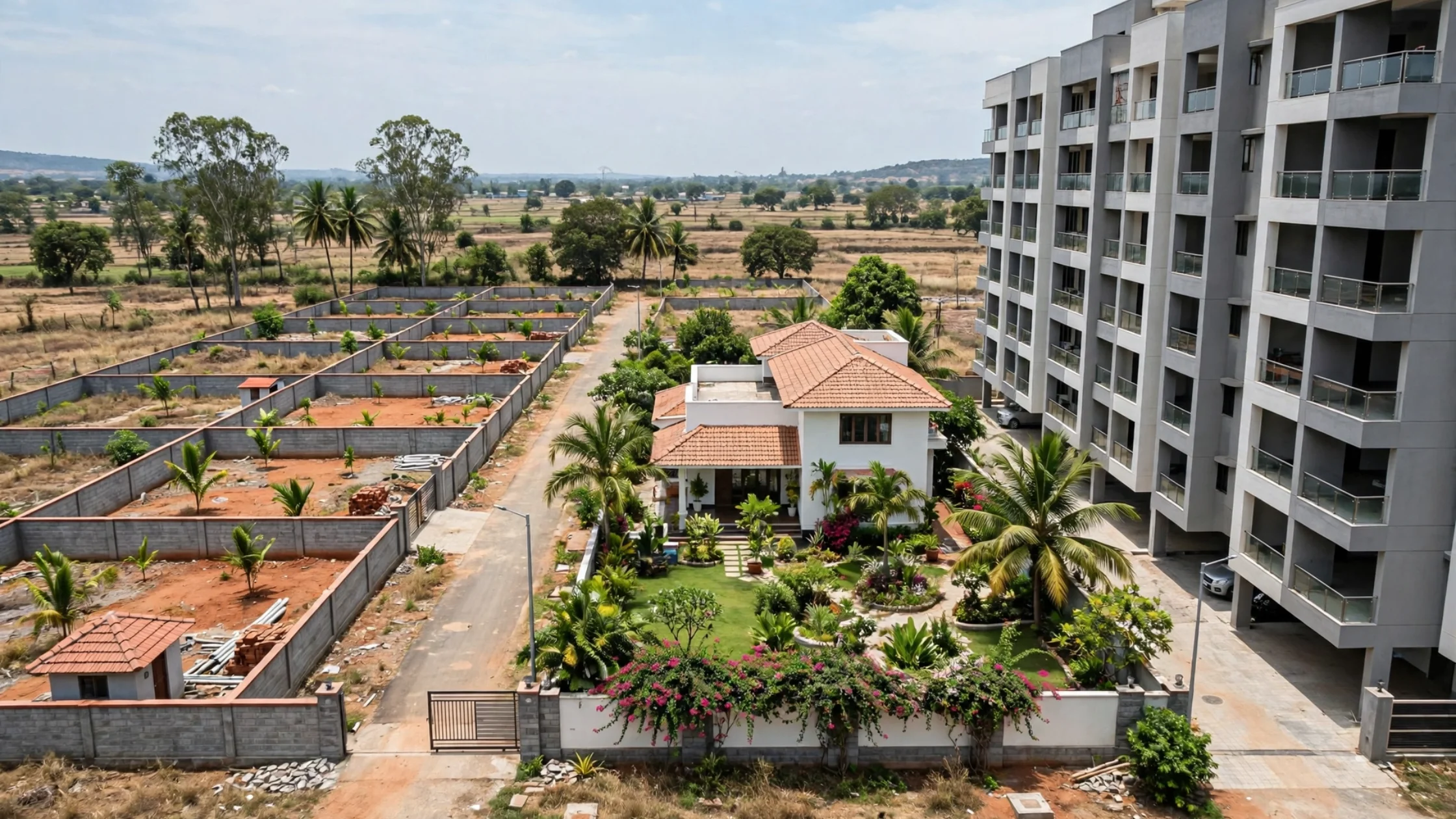
The asset type you choose matters more here than in mature parts of the city.
Plots remain the strongest play for long holds. Supply is finite, approvals are checkable, and holding costs are minimal beyond property tax. The catch is that land earns nothing while you wait, and waiting here means years rather than months.
Villas suit families relocating for work near the airport and hold value reasonably, which is why they dominate the Devanahalli investment opportunities marketed to end users. Apartments are the weakest option purely for yield, because occupancy is still building. Devanahalli homes bought to live in make sense today. Devanahalli homes bought purely to rent out often disappoint in the first few years.
Figures below are broad and indicative only, moving with approval status, road frontage, project quality and negotiation. Use them to compare Devanahalli property investment options against each other rather than as a quote.
| Asset type | Indicative entry | Typical horizon | Rental support |
|---|---|---|---|
| Approved plot | Moderate to high | 7 to 10 years | None |
| 2BHK apartment | Moderate | 5 to 8 years | Weak |
| 3BHK apartment | Higher | 5 to 8 years | Weak to fair |
| Villa | High | 6 to 9 years | Fair |
| Farmland or converted land | Variable | 10 years plus | None |
This is where expectations most often break. Gross yields for apartments here typically sit well below what the same money would earn in Thanisandra or Whitefield, and vacancy periods run longer. Properties near Devanahalli airport do attract airline crew, hospitality staff and project engineers, but that pool is smaller than the marketing implies.
If your plan depends on rent covering most of an EMI from year one, this corridor will test your patience. If rent is a bonus while you hold for capital growth, the maths is more forgiving.
Much of this land was agricultural within living memory, which creates paperwork that city buyers rarely encounter. Work through these carefully:
1. Confirm the conversion order changing land use from agricultural to residential, and read it against the survey number you’re buying.
2. Verify layout approval from BMRDA, BDA or the relevant planning authority, and check whether roads and civic areas have been handed over.
3. Insist on A-Khata. B-Khata inventory here is common and restricts both financing and resale.
4. Pull a thirty-year encumbrance certificate and read the sale deed against the mother deed for an unbroken chain of ownership.
5. For projects, check RERA Karnataka registration and compare the promoter’s earlier delivery record against declared timelines.
6. Budget stamp duty, registration charges and any betterment or development charges into your entry cost.
Engage a property lawyer independently. The seller’s lawyer is not your lawyer, and most Devanahalli property investment mistakes trace back to documents nobody read properly.
Nobody selling you a site will lead with these, so consider them plainly:
• Time. Occupancy is thickening slowly, and a half-empty layout is a poor place to need a quick exit.
• Supply. A large volume of land and projects has been released here, and heavy supply caps price growth even when demand is real.
• Infrastructure slippage. Water, sewerage and internal roads in outer layouts often lag the sales pitch by years.
• Litigation. Older agricultural holdings sometimes carry family disputes that only surface at resale.
• Financing. Some banks are cautious with plots and B-Khata inventory, which narrows your eventual buyer pool.
None of these makes Devanahalli property investment unwise. They shape how much you should pay and how long you should plan to hold.
A Devanahalli property investment suits someone with a seven to ten year horizon, no dependence on rental income, and appetite for a market that will be quiet for stretches. It also suits families who work in the northern employment belt and want more space than east Bangalore offers at the same price.
It doesn’t suit anyone needing yield now, anyone likely to face a cash crunch within five years, or anyone buying because a relative’s story from a decade ago sounded easy. Those Devanahalli investment opportunities came from a different market at a different price.
For long-horizon buyers, yes, with realistic expectations. The steep early gains have already happened, so returns now depend on steady growth rather than a repricing event. Devanahalli property investment works best for people holding seven years or more who don’t need rental income to service borrowings.
Plots have historically performed better in Devanahalli property investment terms because land supply is fixed and structures depreciate. They earn nothing while held and can be harder to finance. Apartments offer some rent and easier loans but face weak yields and longer vacancies. Your cash flow needs should decide.
They generate rent, but yields are modest and vacancy periods are longer than in established tech corridors. Airline crew, hospitality workers and project staff form the main tenant pool. Buy here for capital growth with rent as a secondary benefit rather than the other way around.
Timing. The corridor is likely to keep growing, but slowly enough that a forced sale within a few years could mean a loss after stamp duty and registration costs. Title and approval problems in unconverted or B-Khata land are the second concern, and both are avoidable with proper legal checks.
Devanahalli in 2026 is a reasonable place to put money and a poor place to park money you might need back soon. The employment base is real, approvals are more reliable than they once were, and key infrastructure is already built. Anyone considering Devanahalli property investment today should plan for a longer wait, verify every document independently, and treat rental income as a small bonus rather than the main plan. None of this is investment advice, and a qualified lawyer and financial adviser should review your specific situation before you commit.
If you’re weighing up your options, Naverah Assets can help you explore property opportunities and understand your choices based on your requirements. Connect with Naverah Assets for local real estate guidance.
Follow Naverah Assets on Instagram for more property updates and insights.


