

The sale is agreed, the loan is sanctioned, and someone in the group asks what happens on registration day. That's usually when the panic starts, because property registration in Karnataka involves a specific stack of documents, a fee calculation nobody explains clearly, and a sub-registrar appointment that goes smoothly only if you prepared a week earlier. With guidance from Naverah Assets, buyers can better understand each step and prepare in advance.
None of it is complicated once you see the sequence. What trips buyers up is discovering a missing Khata extract or an unpaid tax receipt at the counter, with the seller, the bank officer and your family all waiting. Naverah Assets helps buyers understand the paperwork, charges and order things happen in, making the registration process easier to navigate.
Under the Registration Act, any transfer of immovable property above a nominal value must be registered. An unregistered sale deed doesn't transfer legal title, can't normally be used as evidence of ownership in court, and won't get you a home loan or a mutated Khata. You also have a deadline: the document should be presented for registration within four months of execution, and delays beyond that attract penalties that can multiply the original fee.
Registration also creates the public record that the next buyer will check. Every encumbrance certificate someone pulls on your property in the future draws from these entries, which is why getting the details right at the counter matters far more than the hour it takes.
• Original sale deed and the mother deed chain, ideally covering thirty years
• Latest Khata certificate and Khata extract from BBMP, the local municipality or panchayat
• Encumbrance certificate for at least the last thirteen to thirty years
• Up-to-date property tax paid receipts
• Approved building plan and, for apartments, the occupancy certificate
• Land conversion order where the land was previously agricultural
• Release deed or no-objection letters where the property was jointly held or inherited
• PAN card, Aadhaar and passport-size photographs
• Bank loan sanction letter and the draft deed the bank has approved
• Proof of TDS deduction under section 194-IA where the consideration crosses fifty lakh rupees
• Two witnesses with valid photo identification
Getting the property registration documents Karnataka sub-registrars expect assembled early is the single biggest time-saver. Photocopies alone won't do; originals are verified at the counter.
Karnataka charges stamp duty on a slab basis linked to the consideration or the guidance value, whichever is higher. Rates are revised periodically, so confirm the current figures on the Kaveri portal before you budget. Karnataka property registration charges are one of the few closing costs you can calculate almost exactly in advance.
A practical rule: set aside roughly 6% to 7% of the property value for the registration process for property transfers, before legal fees and bank charges. If your negotiated price sits below the guidance value, you'll still pay duty on the guidance value, so check it early rather than after you've agreed a number. Budgeting for property registration in Karnataka is one of the most commonly underestimated lines in a home purchase.
1. Get the draft sale deed prepared and vetted by your lawyer and, if applicable, your lender.
2. Verify the guidance value for the survey number and calculate stamp duty.
3. Buy e-stamp paper for the calculated amount, or pay online through the Kaveri system.
4. Book a slot at the jurisdictional sub-registrar office through Kaveri Online Services.
1. Both parties appear in person with originals, along with two witnesses.
2. The sub-registrar verifies identity, checks the stamp duty paid, and captures photographs and biometric thumb impressions.
3. Parties and witnesses sign each page of the deed.
4. The registration fee is paid and the document is scanned and endorsed.
5. The registered deed is returned, usually within a few days, and you download the certified copy from the portal.
The Karnataka property registration flow has moved substantially online in recent years, which has cut waiting time considerably. Even so, physical presence for signing and biometrics is still required unless a properly executed power of attorney is in place.
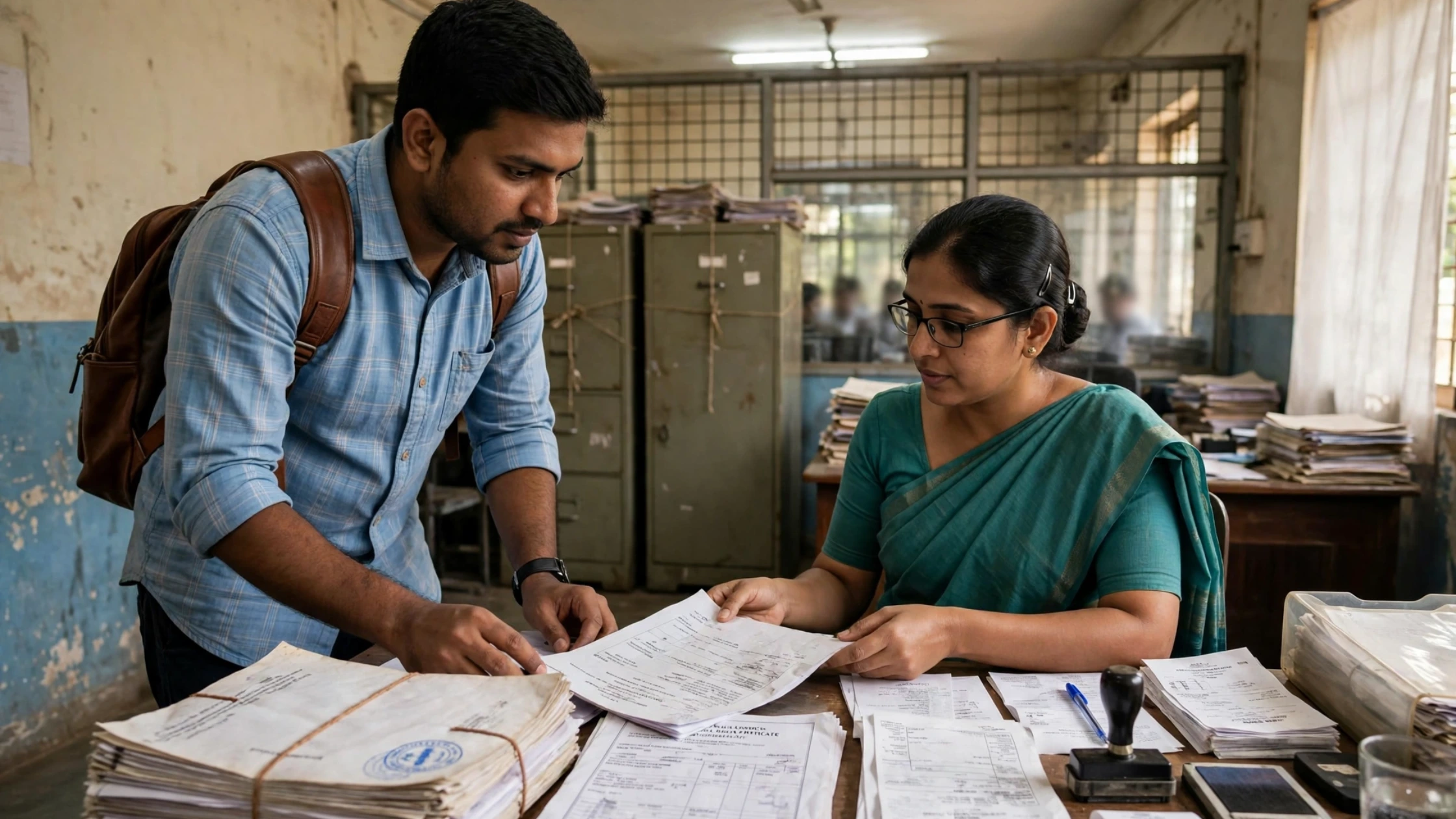
The registration process for property doesn't end when the deed is endorsed. Registration alone doesn't update the municipal record. You still need to apply for Khata transfer or mutation with BBMP, BDA or the relevant local body so tax records show your name. Budget a few weeks for this and keep the registered deed, the EC reflecting the new entry and the tax receipts together. Property registration in Karnataka closes the legal loop, and mutation closes the administrative one. Skipping it causes real problems later, particularly when you sell or apply for a loan against the property.
Not every transfer is a straightforward sale, and the property registration requirements shift with the type of transaction. Property registration in Karnataka handles each of these routinely, provided the supporting paperwork is in order:
• Gift deeds between close family members attract concessional stamp duty, but the relationship must be documented.
• Inherited property usually needs a will, succession certificate or legal heirship certificate plus a release deed from other heirs.
• Power of attorney sales are legitimate but need a properly registered POA with specific powers. General POA sales without registration are a well-known source of litigation.
• Joint ownership requires all co-owners to appear or be validly represented, and the share of each should be stated in the deed.
• NRI sellers trigger higher TDS obligations and typically need additional tax documentation.
Wrong spellings in names, a mismatch between the survey number in the deed and the Khata, unpaid property tax for even one quarter, or an EC that shows an old bank charge that was never released: any of these can stall property registration in Karnataka on the day. Check the draft deed line by line, including the schedule of property and boundaries, because correcting an error afterwards means a rectification deed and another trip. This is general information rather than legal advice, and a qualified property lawyer should review your specific documents.
The appointment itself usually takes an hour or two if your documents are complete. The registered deed is typically available digitally within a few working days. Most of the elapsed time in property registration in Karnataka is preparation: drafting, verification and stamp duty payment often take one to two weeks beforehand.
Not entirely. Stamp duty payment, document preparation and appointment booking happen through the Kaveri portal, but the parties and witnesses must still attend the sub-registrar office for signatures, photographs and biometric verification. Property registration in Karnataka has gone digital on payment and scheduling, while the signing itself stays firmly in person.
Stamp duty is calculated on the guidance value, not your lower agreed price. You'll pay duty on the higher figure regardless. Check the guidance value for that survey number before negotiating, because it directly changes your closing cost. Documenting a lower price to save duty saves nothing and creates tax exposure.
No, it's a separate step done after registration. Once the deed is registered, you apply to the local body for mutation so the tax record carries your name. Treat the property registration procedure and Khata transfer as two distinct tasks.
Property registration in Karnataka rewards preparation and punishes improvisation. Collect the seller's documents early, verify the guidance value before you finalise a price, confirm the current stamp duty slabs, and read the draft deed carefully rather than skimming it at the counter. Then finish the job with Khata mutation so the municipal record matches the registry. Naverah Assets helps buyers approach the process with better preparation and practical property guidance. If you're preparing for a transaction and want the paperwork reviewed before you commit, Naverah Assets can help you get answers matched to your situation. Follow Naverah Assets on Instagram for more smart property tips. Find Your Dream Property in Bangalore.


