
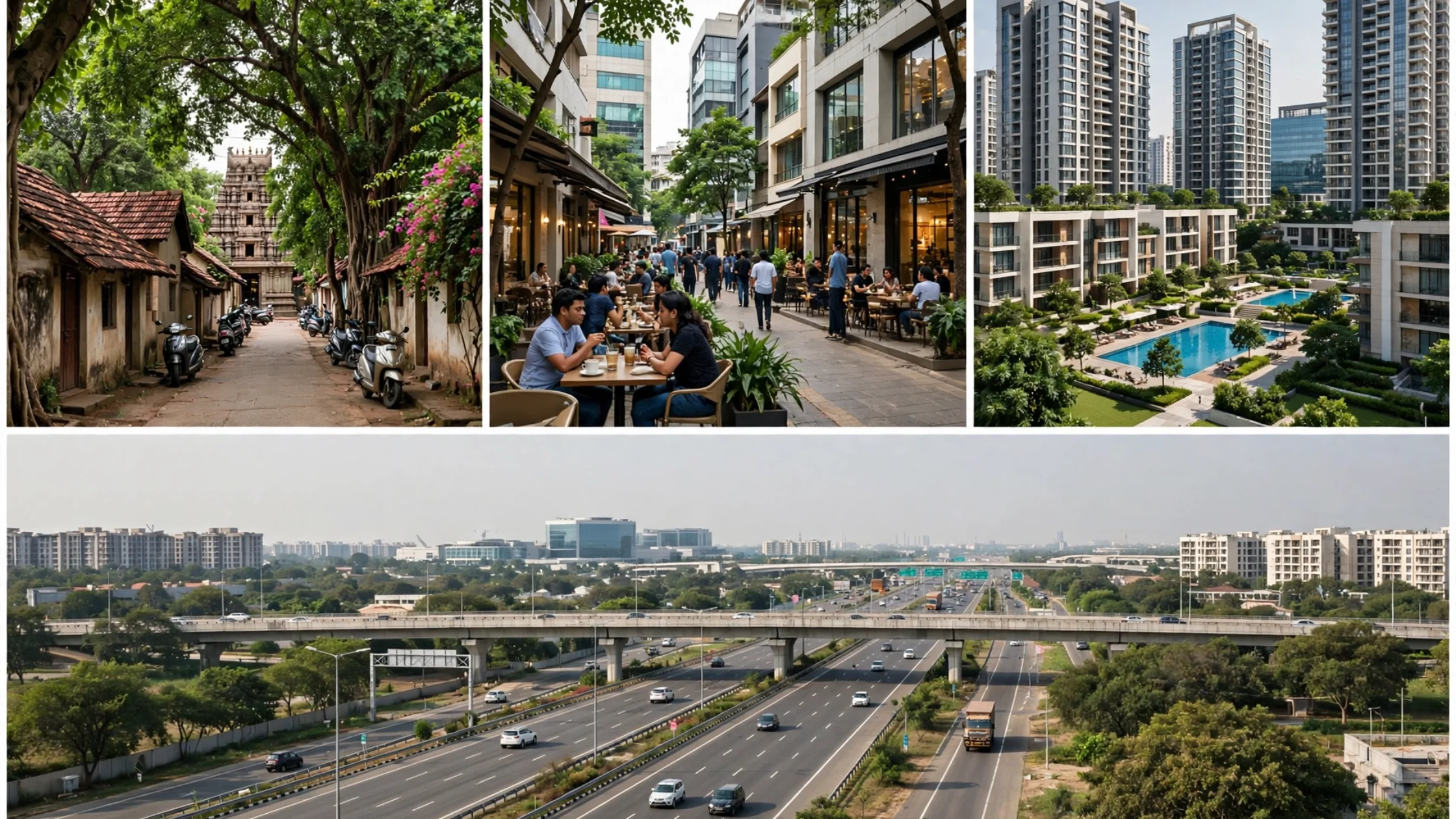
Ask five people in this city where you should live and you’ll get five confident, contradictory answers. Someone in Jayanagar will pity anyone commuting from Whitefield. A Whitefield resident will point out they walk to work while the Jayanagar person spends ninety minutes on Bannerghatta Road. Both are right, which is why the best residential areas in Bangalore can only be judged against your own commute, budget and stage of life. Naverah Assets helps property buyers look beyond popular opinions and consider the practical details that matter when choosing a home.
What follows is a practical comparison rather than a ranking. Commute time, water supply, schools, drainage and monthly cost do more for your quality of life here than any amount of marketing about a neighbourhood’s character. With guidance from Naverah Assets, you can compare these factors and explore residential property options that fit your needs and lifestyle.
Start with commute. In Bangalore, a 12-kilometre difference can mean an extra hour a day, and that hour is the single biggest determinant of whether you’ll still like your home in year three.
Then water. Areas within the piped supply network run very differently from those depending on borewells and tanker deliveries through February to May. Ask neighbours, not the seller. Drainage matters too, because low-lying pockets across the city flood during heavy monsoon spells, and the same street can be fine one year and knee-deep the next.
After that: schools within a reasonable drive, a hospital nearby, daily retail you can walk to, and whether the roads have footpaths worth using. Any honest Bangalore Locality Guide should put those basics ahead of clubhouse photos.
These are the city’s settled, low-rise, tree-lined pockets. Established water and civic infrastructure, temples and markets within walking distance, and a strong sense of neighbourhood. Housing stock skews towards older independent homes and smaller apartment blocks, so parking can be tight and new supply is limited. Prices are high relative to what you get in square footage.
Central, extremely well-served for restaurants, gyms and offices, and popular with younger professionals. The trade-off is cost and noise. Rents here sit at the upper end of the city, and main roads stay busy well into the night. Among the best localities Bangalore offers for convenience, these three consistently rank near the top, provided you can absorb the price.
Jayanagar, JP Nagar, Banashankari and the Kanakapura Road stretch appeal strongly to families, and they show up on almost every list of the best localities Bangalore parents circulate. Schools are plentiful, hospitals are close, parks are usable, and the neighbourhoods have a settled rhythm newer suburbs lack. Metro access along the southern line has improved commuting noticeably.
The main constraint is commute to the eastern tech belt. If your office is in Whitefield or on the ORR, living in JP Nagar means committing to a long, unpredictable drive. Many families accept that trade for schooling and community, and it’s a reasonable choice, but go in with clear eyes about the daily cost.
This is where a large share of the city works, and it’s grown accordingly.
Whitefield has matured into a self-contained area with schools, hospitals, malls and a wide range of housing. Local congestion around Marathahalli and Bellandur is severe at peak hours, and rain compounds it quickly.
Newer stock, strong schools, heavy demand from tech households. Road capacity hasn’t kept pace with construction, so the last two kilometres to any project deserve a weekday test drive.
Water supply varies pocket by pocket across the east more than almost anywhere else, so verify the specific project rather than the area’s reputation. For dual-income tech households, these remain among the best residential areas in Bangalore purely on commute logic.
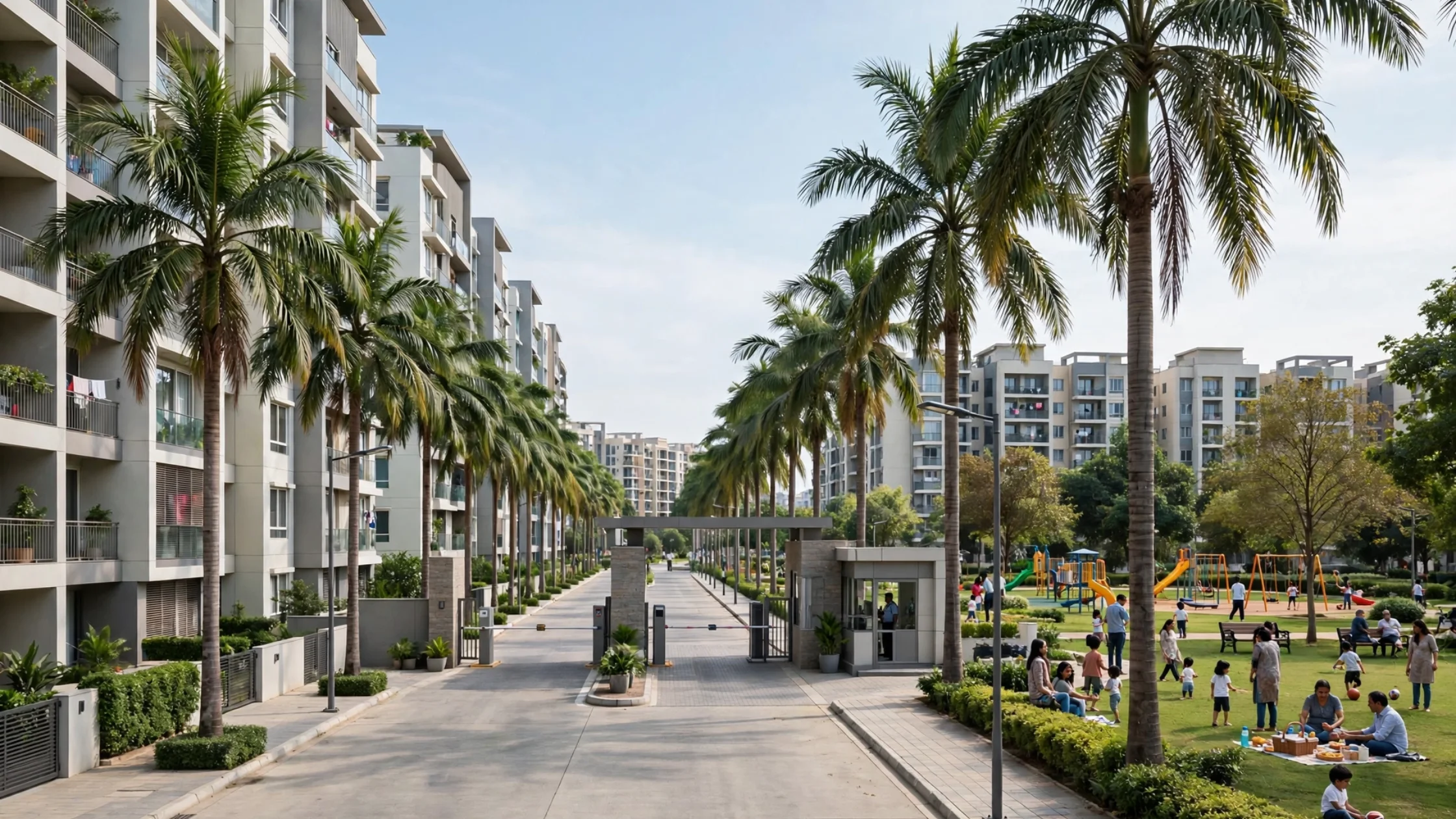
The northern belt has changed character over the past decade, and some of the best residential areas in Bangalore for space per rupee now sit here. Hebbal and Yelahanka offer wider roads, better air on most days, planned layouts and easy airport access, which matters if either of you travels for work.
Housing ranges from mid-segment apartments to genuinely premium projects, with more new supply than the older southern neighbourhoods. Social infrastructure is still filling in beyond Yelahanka, so check school and hospital options against your actual needs. Good places to live Bangalore newcomers rarely consider often turn out to be here, simply because they’ve never driven north.
| Area | Best for | Commute strength | Watch out for |
|---|---|---|---|
| Malleswaram / Basavanagudi | Settled family life | Central, moderate | Older stock, parking |
| Indiranagar / Koramangala | Convenience, social life | Excellent central access | Cost, noise |
| Jayanagar / JP Nagar | Schools, community | Good south, poor east | Long drive to tech belt |
| Whitefield / Sarjapur | Tech commutes, new homes | Excellent to east offices | Traffic, water variability |
| Hebbal / Yelahanka | Space, airport access | Good north and ORR | Developing social infra |
| Electronic City | Affordability, south IT | Strong on the elevated road | Limited nightlife, monotony |
Use this the way any Bangalore Locality Guide should be used: as a starting filter, not a verdict. Within these Bangalore Residential Neighborhoods, two projects a kilometre apart can differ sharply on water, drainage and approach road quality.
Cost separates the shortlist quickly, and it’s where the best residential areas in Bangalore stop being a matter of taste. Central areas command the highest rents, established southern areas sit slightly below, eastern corridors vary widely by project age, and northern pockets generally offer the most space per rupee.
• Rent consumes a large share of monthly income in central areas; budget conservatively.
• Maintenance charges scale with apartment size and amenity load, and never go down.
• Factor commute cost honestly: fuel, cab fares and time you can’t recover.
• For purchases, add roughly six to seven percent in Karnataka for stamp duty, registration and associated charges.
Good places to live Bangalore residents actually stay in tend to be the ones where the monthly total, not just the rent or EMI, sits comfortably within income.
1. Map your office, your children’s likely school and your parents’ hospital, then draw a realistic commute radius around them.
2. Visit shortlisted areas twice: once at 9am on a weekday, once after heavy rain if you can manage it.
3. Ask three residents about water supply, power cuts and flooding, since sellers will not volunteer this.
4. Check the legal file properly for any purchase: RERA Karnataka registration, A Khata, BBMP or BDA approvals, encumbrance certificate and mother deed.
5. Rent in the area for six months before buying if you’re new to the city.
That last point saves more regret than any comparison table can. Living somewhere for a season teaches you things no site visit reveals.
South Bangalore neighbourhoods like Jayanagar, JP Nagar and Banashankari remain the Family-Friendly Areas Bangalore parents recommend most, with deep school and hospital options. Whitefield and Sarjapur Road work well for households working in the eastern tech belt, offering newer housing and good schools, though traffic is the daily trade-off.
Hebbal and Yelahanka have improved considerably, with planned layouts, wider roads, airport access and a growing employment base. Social infrastructure is less dense than in older southern areas, particularly further out. It suits buyers who want space and calm, and who don’t need a central location every day.
Very. Pockets outside the piped network rely on borewells and tankers, and costs rise sharply through the dry months. It also affects resale later. Ask existing residents directly about supply during February to May rather than relying on the builder’s assurance.
Usually yes, especially if you’re new to the city. Six months in an area tells you about traffic patterns, water, noise and neighbours in a way that weekend visits cannot. It’s a small cost against a purchase that ties up your capital for years.
The best residential areas in Bangalore aren’t a fixed list, and anyone who gives you one without asking where you work is guessing. Start from your commute, verify water and drainage on the specific street rather than the area’s reputation, weigh school and hospital access against your family’s real needs, and budget for the full monthly cost rather than the headline rent or EMI. Visit at peak hour, talk to residents, and rent first if you can. Get that groundwork right and most neighbourhoods on your shortlist will serve you well. This is general information rather than personalised advice.
If you’re weighing up your options, Naverah Assets can help you explore suitable properties with local market insights. Speaking with an experienced property team and an independent legal advisor can also help you get answers matched to your situation. For more property updates, tips, and new opportunities, follow Naverah Assets on Instagram and stay in the loop. Follow us on Instagram for your next property update!


