
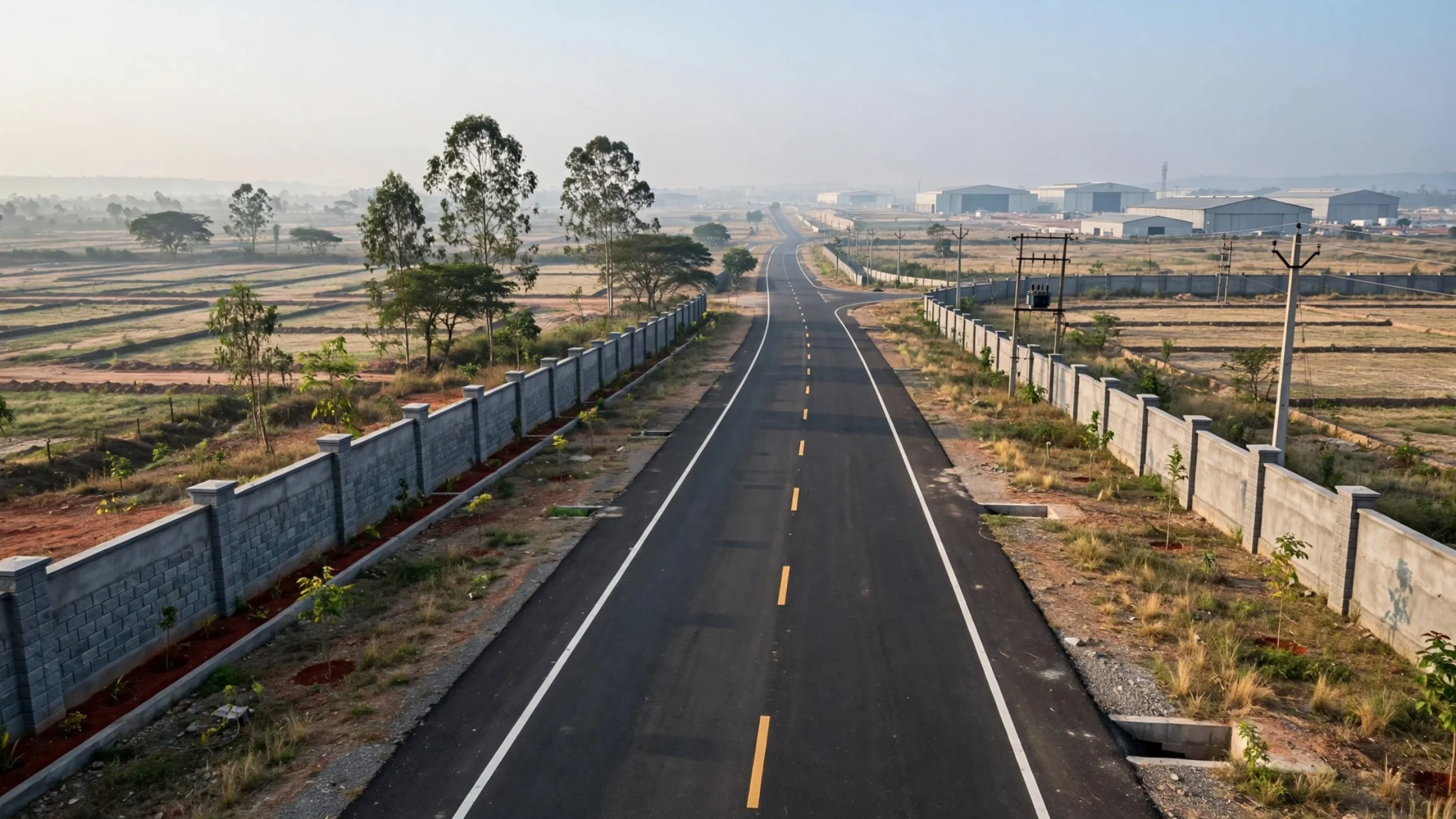
Five years ago, mentioning Bagalur to a buyer in Koramangala got you a blank look. Now it turns up on shortlists next to Devanahalli and Thanisandra, usually because someone checked the price per square foot and did a double take. That price gap is the honest reason interest in Bagalur property investment has grown, and it deserves examining rather than accepting. Naverah Assets helps buyers explore the changing property landscape and understand the options available in emerging Bangalore corridors. This piece covers what’s actually behind the shift, what the corridor offers today, and where buyers get caught out. It’s general information rather than investment advice, and any specific decision should be checked with your own advisers. For property seekers comparing locations and opportunities, Naverah Assets can provide further information to support their research.
The simplest explanation is arithmetic. Land and homes here cost meaningfully less than comparable options closer to the airport or along Bellary Road, while sitting within the same broad employment catchment. Buyers priced out of Devanahalli’s core moved outward, as they always do. Nearly every Bagalur property investment story starts with that arithmetic rather than a grand thesis about the north.
Approvals have improved too. More layouts now carry proper planning sanction and A-Khata, which changes the buyer profile from pure speculators to families and long-hold investors. That shift usually marks the point where a corridor starts behaving like a suburb rather than a bet, and it’s the strongest argument for taking Bagalur property investment seriously today.
Location does the heavy lifting here, so it’s worth being precise about it.
Bagalur sits north-east of the city, linked to the airport road and to the Hennur and Thanisandra stretches leading back into Bengaluru. Commute times depend on which internal road you take, and vary far more than a map suggests. Drive the route at 9am on a weekday before deciding anything.
The employment supporting the Bagalur growth corridor sits around the airport belt, the aerospace and hardware parks near Devanahalli, and the office clusters at Manyata and Thanisandra. A genuine base, though a spread-out one. Nobody walks to work here, which is worth factoring into how you value the location.
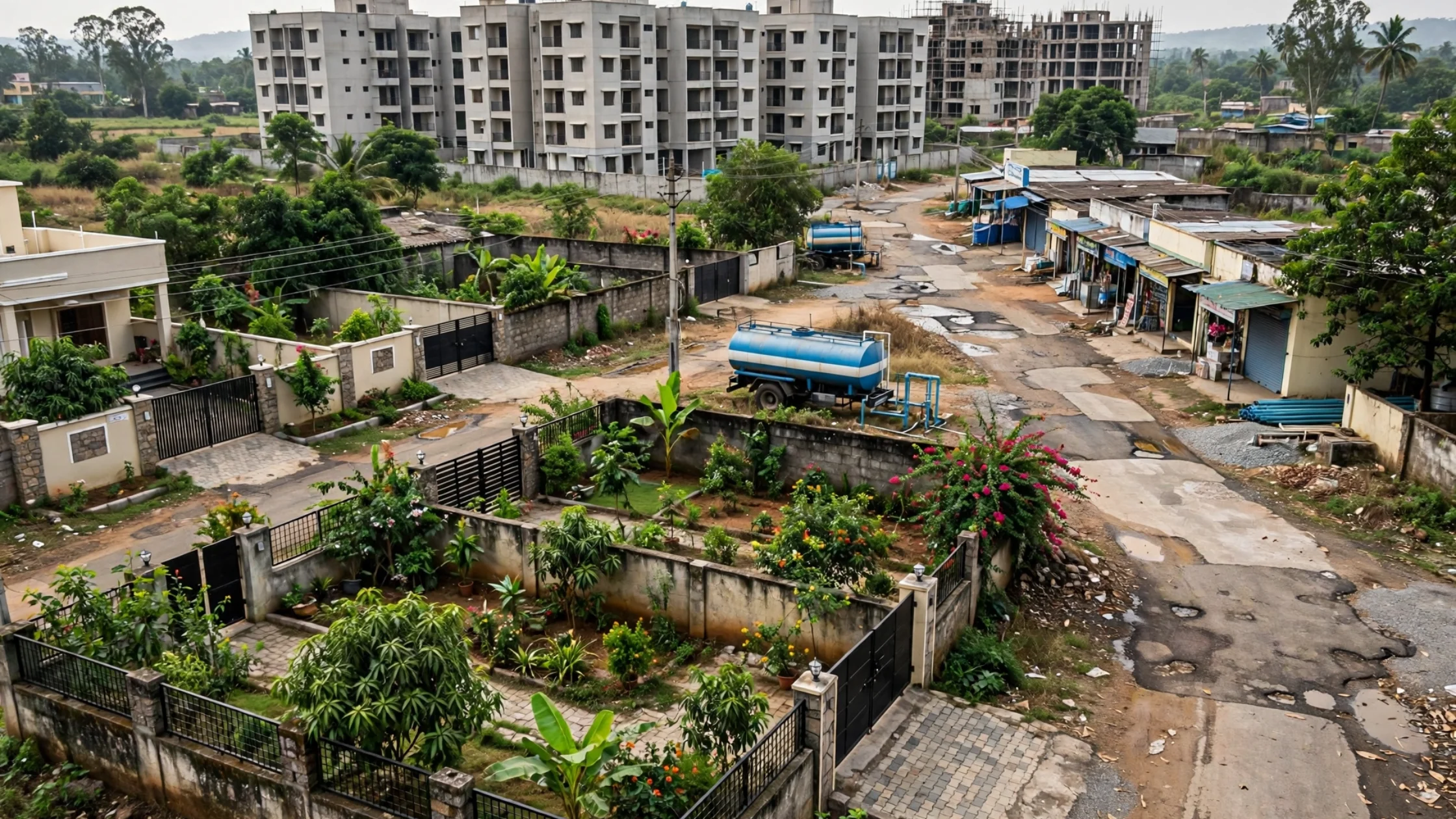
The asset mix here skews differently to established parts of the city.
Plots dominate. Fixed supply, low holding costs, and the flexibility to build later suit a corridor still filling in. The trade-off is that a plot produces no income at all, and internal layout infrastructure sometimes arrives years after the sale.
Bagalur residential projects have multiplied, particularly villa plots and mid-rise apartment schemes aimed at airport-belt employees. Villas hold value better here than apartments because buyers seeking space are the natural demand. Apartments purchased purely for rent tend to underperform while occupancy builds. Match the asset type to your reason for making a Bagalur property investment at all.
Ranges below are indicative and depend on approval status, road width, plot dimensions, project quality and how hard you negotiate. Use them to weigh Bagalur property investment options against each other, not as a quotation.
| What you’re buying | Relative entry cost | Horizon | Income while holding |
|---|---|---|---|
| Approved plot in a sanctioned layout | Moderate | 7 to 10 years | None |
| Villa plot in a gated scheme | Moderate to high | 6 to 9 years | None |
| 2BHK apartment | Moderate | 5 to 8 years | Weak rent |
| Villa | High | 6 to 9 years | Fair rent |
| Unapproved or revenue land | Low | Uncertain | None |
That last row exists as a warning rather than a suggestion.
Set against its neighbours, the picture gets clearer:
• Versus Devanahalli: cheaper entry, thinner amenities, similar long-term drivers. Devanahalli is further along the curve and priced accordingly.
• Versus Yelahanka: Yelahanka is an established suburb with schools, retail and rental demand. You pay for that, and you get liveability now instead of later.
• Versus Thanisandra: Thanisandra has a working office cluster and functioning rental market. Bagalur offers a lower base price and a longer wait.
Read that way, the Bagalur property market is best understood as an earlier-stage version of what its neighbours already are, which is exactly where both the upside and the risk sit. Anyone comparing Bagalur investment opportunities with established suburbs is really choosing between paying now and waiting later.
Much of this land was agricultural recently, so the documentation deserves more attention than a city apartment would need:
1. Check the conversion order changing land use from agricultural to residential, matched to the exact survey number.
2. Confirm layout approval from BMRDA, BDA or the relevant authority, and ask whether roads and civic amenities have been handed over.
3. Insist on A-Khata. B-Khata plots in Bagalur real estate are common, cheaper, and considerably harder to finance or resell.
4. Take a thirty-year encumbrance certificate, then read the sale deed against the mother deed for an unbroken chain of title.
5. For any project, verify RERA Karnataka registration and compare the developer’s completed work against declared timelines.
6. Add stamp duty, registration charges and development or betterment charges to your entry cost before you calculate returns.
Appoint your own property lawyer. It’s a small cost against the sum involved, and it is where most Bagalur property investment disputes could have been prevented. Ask the same questions of Bagalur residential projects marketed by large developers as you would of a private seller.
Interest in a corridor doesn’t remove its problems, and a Bagalur property investment carries a fairly specific set. Weigh these honestly:
• Amenity lag. Schools, hospitals and daily retail remain thin, so early residents drive for most things.
• Water and sewerage. Borewell dependence and tanker supply are real running costs and affect resale value.
• Supply volume. Plenty of land has been released here, and heavy supply flattens price growth even when demand is genuine.
• Exit liquidity. Selling in a half-occupied layout can take months, often at a discount to the asking price.
• Timeline slippage. Infrastructure promises attached to Bagalur investment opportunities have a history of arriving late across this whole belt.
This corridor rewards patience and punishes urgency. Bagalur property investment makes sense if you have a seven to ten year horizon, no reliance on rental income, and enough financial slack to sit through a flat stretch without selling. It also works for families employed in the northern belt who want more land than their budget buys elsewhere.
It’s a poor fit if you need yield now, if a job change could force a sale within three or four years, or if you’re buying because the phrase sounded promising in a WhatsApp forward. Those are the purchases that go wrong.
For long-horizon buyers, it’s a reasonable option with clear trade-offs. Prices sit below Devanahalli and Yelahanka, and the employment drivers are shared. Bagalur property investment demands patience, clean documentation and no dependence on rent, since occupancy and amenities are still building out.
Plots generally suit this corridor better. Land supply is fixed, holding costs are low, and buildings depreciate. Apartments give you modest rent and easier home loans, but yields here are weak and vacancies longer than in established areas. Villas sit sensibly between the two for end users.
It sits within the northern airport belt, closer to the airport than to central Bengaluru, with travel times varying widely by route and time of day. Rather than trusting quoted distances, drive the commute yourself during peak hours, since internal road quality changes the experience considerably.
Title and approval gaps top the list, particularly unconverted land and B-Khata plots. After that come amenity lag, water supply dependence, heavy competing supply and slow resale liquidity. Careful legal verification and a realistic holding period address most of these before they become expensive problems.
More buyers are looking north because the price gap is real, and the employment story behind it is not invented. What Bagalur asks in return is time. Amenities are still developing, rental support can be limited, and the layouts filling up today may take years to feel like established neighbourhoods. Treated as a long-term hold with proper legal verification, Bagalur property investment can be a considered choice. Treated as a quick flip, it may disappoint. Check the conversion order, khata and encumbrance certificate before focusing on the price, and remember that this is not investment advice.
If you’re weighing up your options, Naverah Assets can help you explore properties and understand the local market based on your requirements. Connect with Naverah Assets for property guidance tailored to your situation.
Follow us on Instagram for more Bangalore property updates.


